
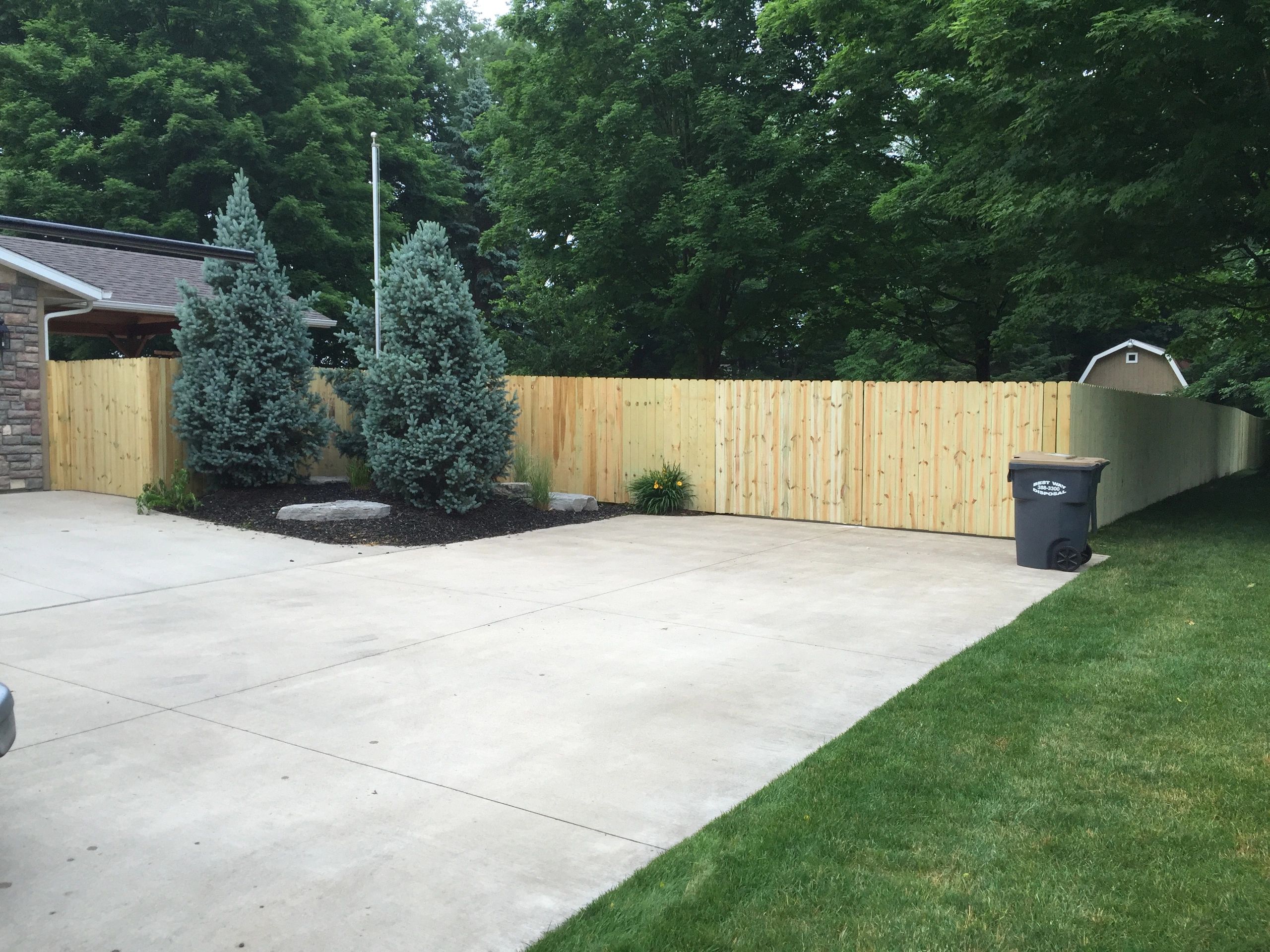
When homeowners say they want a privacy fence, they usually mean more than one thing. They may want less visibility from neighbors, a safer yard for children or dogs, a cleaner edge to the lot, or a quieter feeling in the backyard. That is why the best privacy fence is not only about panel height. It is also about layout, material, gates, and how the yard is actually used.
Wood privacy fencing is still a go-to
Wood privacy fences remain a strong choice for homeowners who want a solid backyard boundary with a more traditional look. They create real separation, work well for pet yards, and can feel warmer and more natural than some other options.
They are especially appealing when curb appeal matters and the homeowner likes the character that wood brings to the property. The tradeoff is that wood asks for more ongoing inspection and maintenance over time.
Vinyl privacy fencing keeps the look cleaner with less routine upkeep
Vinyl privacy fencing is popular for homeowners who want a smooth, consistent finished line and a lighter maintenance routine. It can be a very practical option when the goal is privacy plus a cleaner ownership experience.
That does not mean it is automatically better than wood. It simply fits a different set of priorities. If you want privacy without the same refinishing expectations, vinyl often stays high on the list.
Shadowbox and neighbor-facing appearance still matter
Not every privacy fence has to be the same on both sides, but appearance from the neighbor side still matters. A fence that looks intentional from both directions tends to age better socially and visually. In some yards, a shadowbox or other balanced look can make the project feel less harsh while still creating useful separation.
Height is only part of the privacy equation
Homeowners often focus on height first, but layout matters just as much. A shorter fence in the right location can do more than a taller fence in the wrong one. Corners, gate placement, grade changes, patio orientation, and sight lines from nearby homes all affect how private the yard actually feels.
Wind, spacing, and real yard conditions matter
Michigan backyards are not all the same. Some are exposed to wind. Some stay wet longer than others. Some have more slope or more daily traffic. The right privacy fence should work with those conditions instead of ignoring them. That is why the fence plan has to come from the property, not just from a material list.
Gates are part of the privacy plan
If the fence is meant to improve daily use, the gate plan deserves real attention. A backyard fence may need one walk gate, a wider mower gate, or a layout that avoids bottlenecks between the house and side yard. When pets, children, or frequent backyard hosting are part of the picture, gate placement becomes even more important.
The best privacy fence is the one that fits how you live
Privacy is the goal, but use still drives the design. A fence should help the yard feel calmer, safer, and easier to use. The right answer may be wood. It may be vinyl. What matters most is whether the finished layout works for the people using it every day.
If you are comparing privacy options now, start with our wood fencing, vinyl fencing, and gates and repairs pages for a clearer next step.
Frequently asked questions
What privacy fence material is most popular?
Wood and vinyl are both common privacy choices, with the better fit depending on appearance and maintenance expectations.
Do gates matter as much as the fence itself?
Yes. Daily access, latch placement, and mower or pet access often make the gate plan just as important as the panels.