
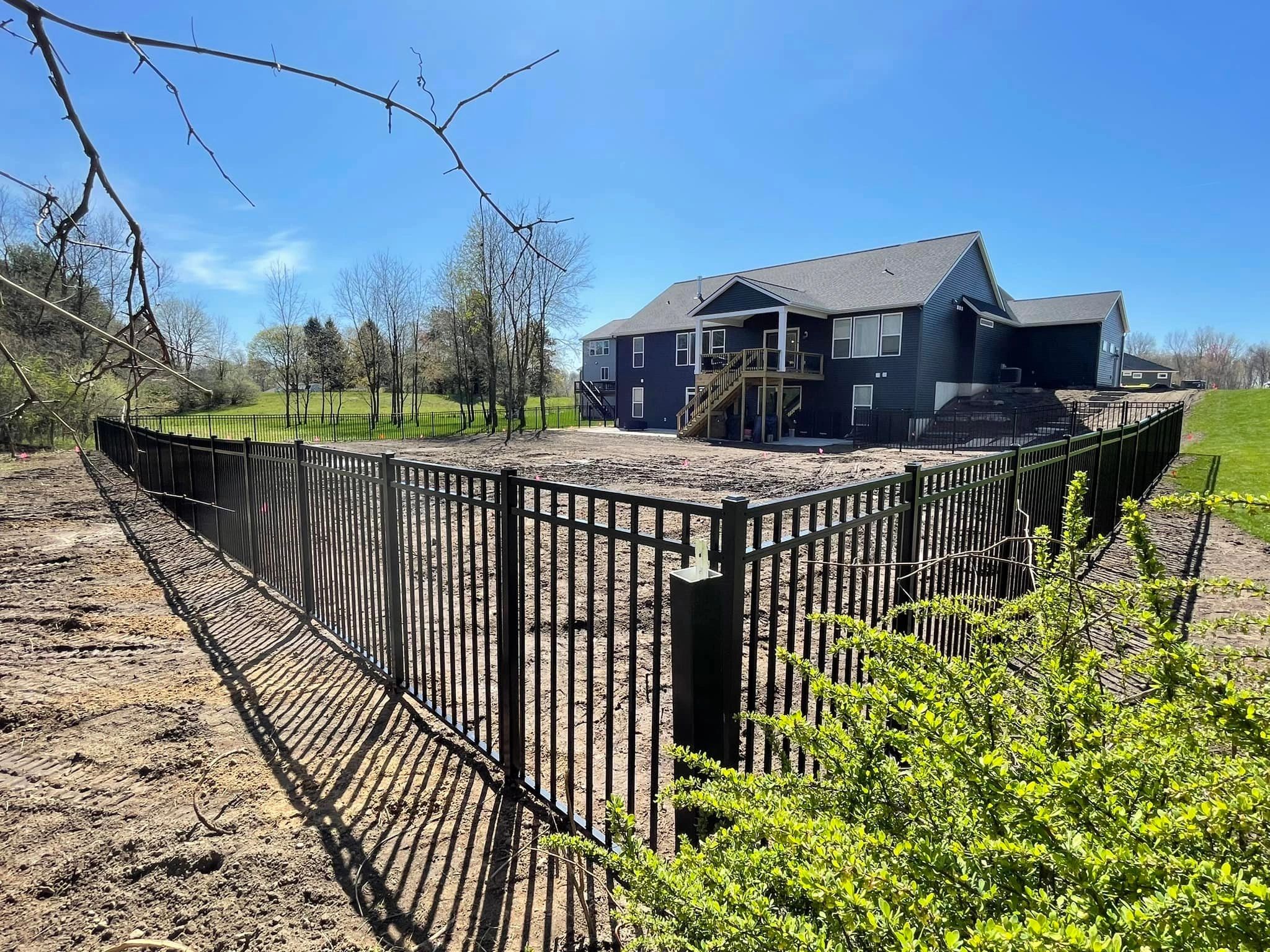
One of the most common estimate questions is how long a fence project will take once the work starts. The short answer is that some fences move quickly and others do not. A small backyard run is different from a long rural property line, a repair job, or a layout with multiple gates and grade changes.
The best way to think about timing is not “How many days per fence?” It is “What conditions are we working with?”
Small backyard jobs usually move faster
A straightforward backyard fence with decent access and a clean layout usually moves much faster than a complicated property edge. When the line is clear, the material is ready, and the gates are simple, the crew can stay focused on layout, posts, panels, and hardware instead of problem-solving every few feet.
That does not mean every small job is quick, but compact residential runs are often easier to schedule and execute than larger mixed-use properties.
Longer rural or property-line jobs take more coordination
Rural properties, farm runs, and longer line installs often involve more than just additional footage. They can include changing terrain, driveway crossings, access challenges, brush, utility considerations, and more gate planning. A longer project may still move efficiently, but there are simply more decisions and more conditions to work through.
Utility marking matters
Digging cannot ignore what is below the surface. Utility marking, sprinkler awareness, invisible dog fence wire, and drainage features can all affect how quickly the project starts. Sometimes the fence line is ready. Sometimes the schedule has to wait for the prep work around it.
This is one reason a fence timeline is not just about labor. It is also about site readiness.
Weather can change the pace
Michigan weather is a real part of fence scheduling. Wet ground, muddy access, spring thaw, heat, storms, or early winter conditions can all affect how comfortably and cleanly a job moves. Even when crews work year-round, the conditions still matter. Good work sometimes means slowing down enough to do the layout and post setting right.
Concrete and post-setting time still count
Customers often think of the visible parts of the fence first, but the hidden stability matters just as much. Proper post setting is one of the biggest quality factors in the entire project. That means a realistic schedule has to account for the work below grade, not just the panels above it.
Gates and custom details add real time
Gates are not an afterthought. They affect access, alignment, daily use, and how satisfied a homeowner is months later. A fence with one simple walk gate is different from a layout that needs mower access, driveway access, or multiple entry points. Custom details, corners, transitions, and fit-up work usually add time because they deserve extra care.
Material availability still affects start dates
Even when the on-site work itself is efficient, a project may still depend on material lead times or coordination around repairs, special layouts, or specific finishes. That is why the timeline question often has two parts: when the project can start, and how long the on-site work will take once it does.
The most useful answer comes after layout context
A good fence company can usually give you a more realistic time estimate once it understands:
- roughly how much fence is needed
- what type of fence it is
- how many gates are involved
- how easy the access is
- what the ground and property edge look like
That is one reason the new planner page is helpful. It gives the estimate conversation a better starting point before the site visit.
If you are trying to map out timing now, start with the services overview, look at gates and repairs, or send the property details through the estimate form.
Frequently asked questions
Can weather delay a fence job?
Yes. Wet ground, storms, and seasonal conditions can slow layout, digging, and concrete-setting timelines.
Do gates add time to a project?
Often, yes. Gates add layout, hardware, and alignment work that usually takes more care than a straight fence run.