
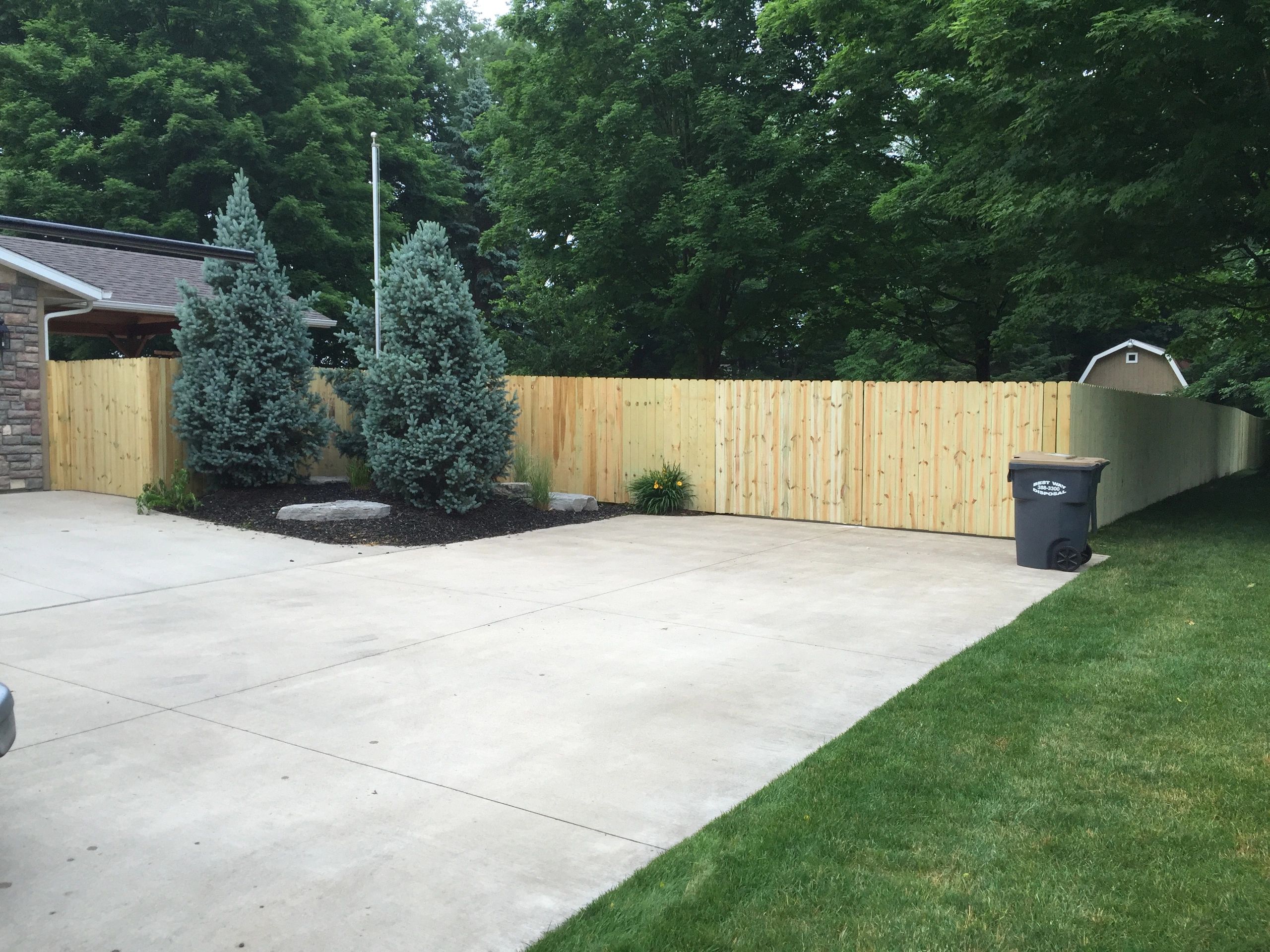
A good fence starts before the first post goes in. If your yard is ready, the work moves faster, the layout stays cleaner, and it is easier to avoid the small surprises that can slow a project down. Whether you are planning a backyard privacy fence, a pet fence, or a longer property-line run, a little prep makes installation day easier for everyone.
Clear the work area
Start by moving the things that can get in the way. Patio furniture, toys, hoses, planters, firewood, and yard tools should be pulled back from the fence line. Trim heavy brush if it is crowding the layout area, and make sure there is a practical path for materials and tools to move through the yard. If there is a locked gate, make sure the crew can access it.
Mark what is hidden
Before digging starts, underground utilities need to be located. That includes the obvious lines and the less obvious ones, too. If you have sprinkler heads, invisible dog fence wire, low-voltage landscape wiring, or drainage features near the fence line, mark them clearly. A clean layout on the surface can still hide surprises below grade.
Think through your gate locations
Many homeowners focus on the fence panels first and the gates second, but daily access matters just as much as the fence itself. Think about how you move through the space now. Do you need room for a mower, a trailer, garbage bins, or side-yard access? Do you want one walk gate or two? If pets or children use the yard, gate placement and latch height matter even more.
Talk with neighbors when the line is close
If the fence is going near a shared property edge, have the conversation early. That does not have to be complicated, but it does help avoid confusion later. If you already have a survey, keep it handy. If you are not fully sure where the line sits, it is better to sort that out before the post holes are marked than after the fence is underway.
Plan for kids, pets, and the install day itself
Fence installation means tools, materials, digging, and open work areas. Have a plan to keep children and pets safely away from the active zone. If your dog relies on the yard every day, think ahead about a temporary leash route or backup exercise plan while the work is happening.
A simple pre-install checklist
Walk the line. Clear the clutter. Mark the hidden systems. Decide on gate placement. Confirm access. Talk through property-line questions. If you do those few things in advance, your fence project starts on steadier ground.
If you need help turning that prep into a real plan, start with our wood fencing and vinyl fencing service pages or head straight to the estimate form.
Frequently asked questions
Do I need a survey before every fence?
Not always, but if the line is unclear or close to a neighbor, it is often the safest move.
Should I trim shrubs myself?
Light trimming helps, but ask before cutting anything major near the planned fence line.