
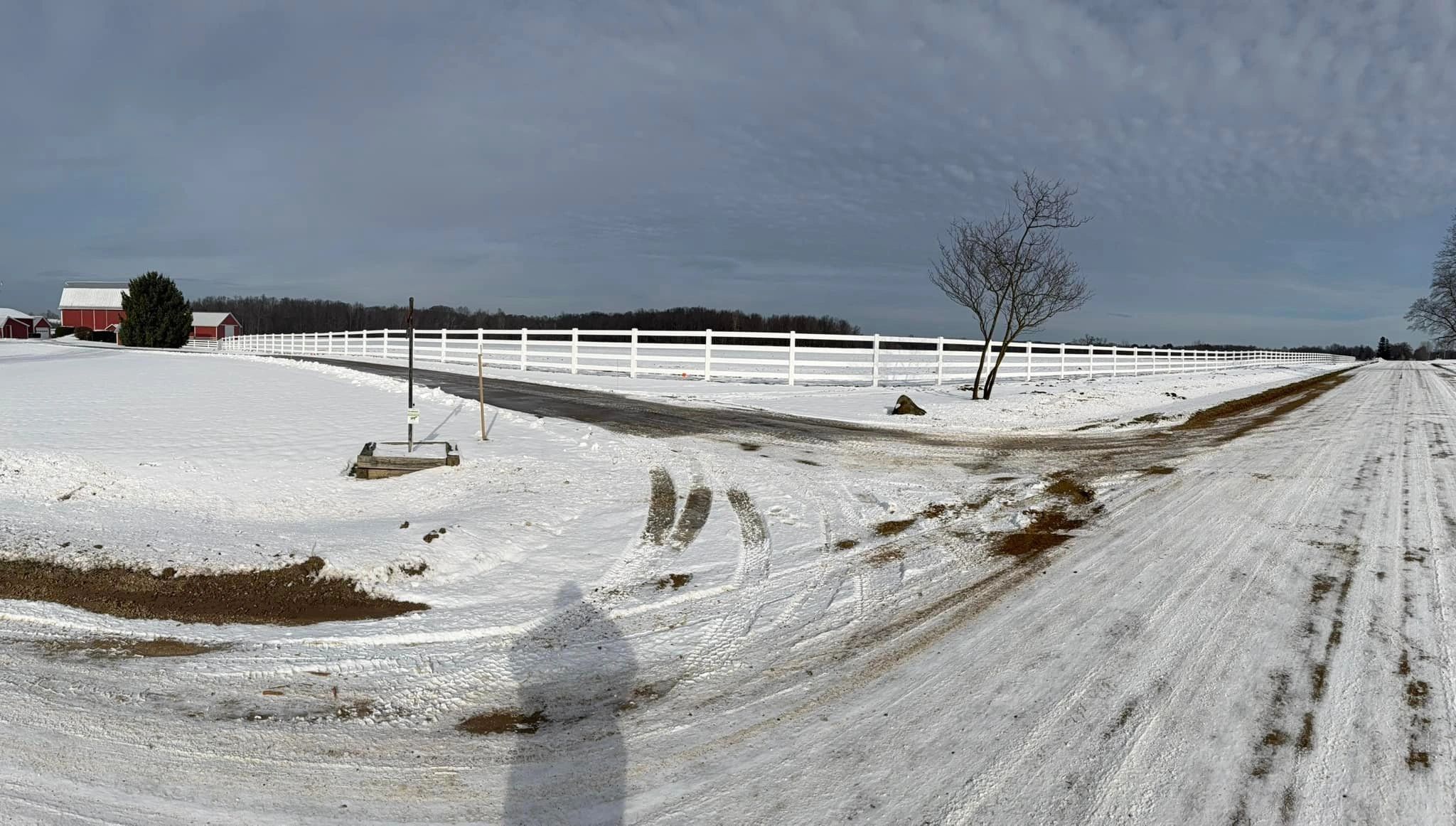
Michigan weather is not gentle on outdoor materials. Snow, thaw, spring moisture, summer heat, and fall storms all put pressure on a fence over time. That is why the wood-versus-vinyl question matters so much for homeowners here. The better fence is not just the one that looks good in a photo. It is the one that fits the property, the maintenance expectations, and the way the yard is used.
Start with the look you want
Wood and vinyl give you two different visual directions. Wood tends to feel warmer, more traditional, and easier to blend into older neighborhoods or natural backyard settings. Vinyl feels cleaner and more uniform, which many homeowners like when they want a crisp finished line and less variation from section to section.
If curb appeal matters from the street, the style of the house and the yard should drive some of the decision. A good fence should feel intentional, not pasted onto the property.
Think about maintenance honestly
This is usually where the decision gets clearer.
Wood fences need regular inspection, especially near the ground, around gates, and in areas that stay damp longer after rain or snowmelt. Depending on the finish and exposure, wood may also need sealing, staining, or other upkeep over time.
Vinyl usually asks for less routine work. It still needs cleaning and occasional hardware checks, but it does not need the same refinishing cycle that wood often does. For homeowners who want a cleaner maintenance schedule, that can be a deciding factor.
Michigan weather affects both, just in different ways
Freeze-thaw cycles matter in Southwest Michigan because the ground moves, moisture sticks around, and exposed areas take a beating through the year. That means the question is not only about boards or panels. It is also about post setting, drainage, layout, and how the fence handles wind and everyday use.
With wood, long-term trouble often shows up in lower sections, contact points, and places where moisture sits too long. With vinyl, the material itself may reduce some maintenance headaches, but poor installation or stressed components can still create problems later. Gates, corners, and transitions deserve attention with either fence.
Privacy is strong on both sides
If the goal is backyard privacy, both wood and vinyl can do the job well. Wood privacy fences are popular because they give a solid boundary and a classic look. Vinyl privacy fences offer a similar enclosed feel with a cleaner finish and lower routine upkeep for many homeowners.
The better choice often comes down to whether you care more about the look of natural wood or the lower-maintenance appeal of vinyl.
Budget is not just about the first invoice
Price matters, but it helps to think in two stages.
The first stage is installation cost. The second stage is ownership cost over time. A fence that looks cheaper at the beginning can ask for more upkeep later. A fence that costs more up front may feel easier to live with over the long run. That is why the best question is not “Which one is cheapest?” It is “Which one fits how I want to own this fence?”
Yard use still matters
Some yards need more than privacy. They need pet containment, gate access, a good street-facing appearance, or layout flexibility on uneven ground. If the fence has to work around daily movement, mower paths, children, dogs, or side-yard access, those factors matter just as much as the material.
A good recommendation should be built around how you actually use the space, not just around a material trend.
So which is better?
Wood may be the better fit if you want a traditional look, strong privacy, and do not mind routine upkeep. Vinyl may be the better fit if you want privacy with a cleaner maintenance schedule and a more uniform finished appearance.
In Southwest Michigan, either one can be a solid choice when the fence is planned well and installed around the real conditions of the property.
If you are narrowing it down now, compare our wood fencing and vinyl fencing service pages, or send a few project notes through the estimate form.
Frequently asked questions
Does vinyl handle Michigan moisture better than wood?
Vinyl generally asks for less routine upkeep around moisture, but proper installation and post setting matter with either material.
Is wood still a good choice for privacy in Michigan?
Yes. Wood is still a strong privacy option when you want a warmer look and are willing to keep up with inspection and maintenance.